
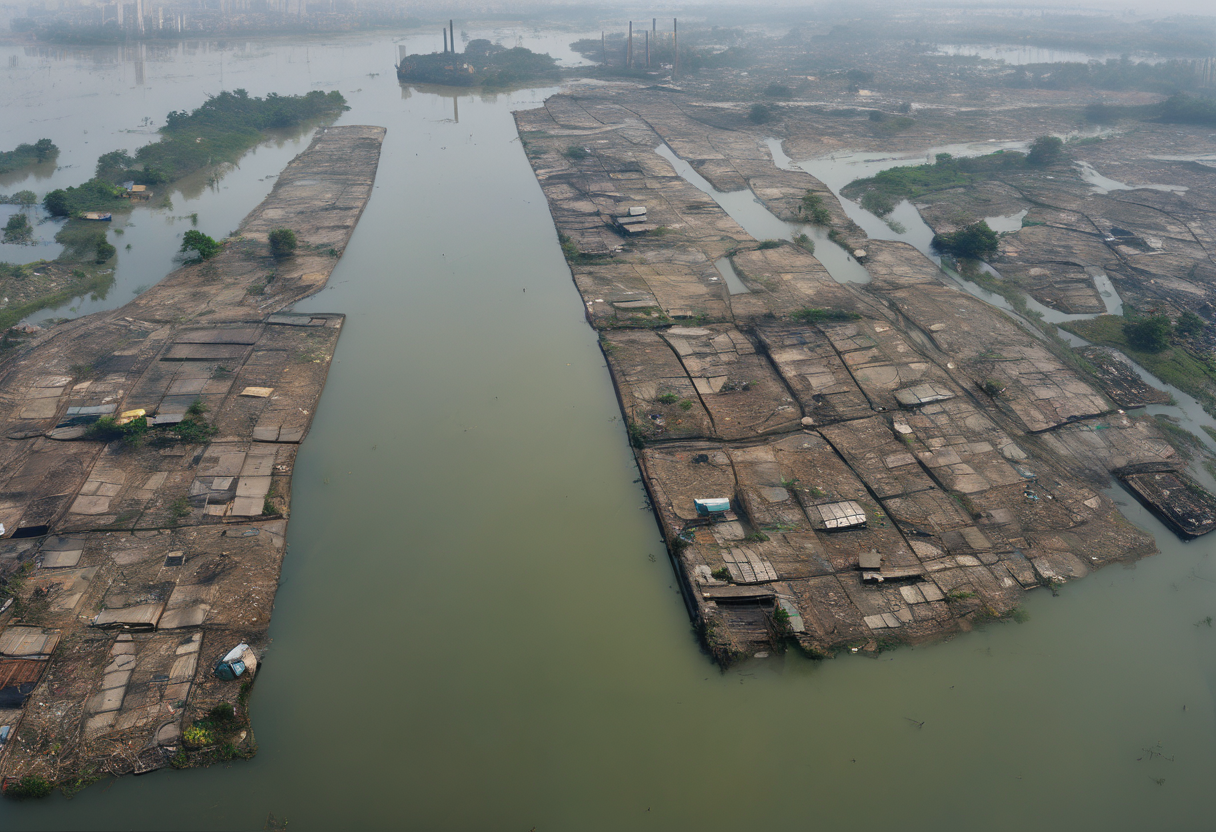
Dhaka Division, located in Bangladesh, is one of the most densely populated regions in the world. With a bustling urban center and a rapidly growing industrial sector, the division has experienced significant economic growth in recent years. However, this growth has come at a cost – the degradation of water quality due to industrial pollution.
The division is home to a large number of manufacturing industries, including textiles, leather, and pharmaceuticals. These industries have a high demand for water, and as a result, they discharge large amounts of untreated wastewater into the surrounding water bodies. This has led to a severe decline in the quality of water in Dhaka Division, making it unsafe for both human and aquatic life.
The industrial wastewater contains harmful chemicals and toxic substances that not only pollute the water but also contaminate the soil and air. This has had a significant impact on the agriculture and fisheries industries in the division, leading to decreased crop yields and fish mortality. Moreover, the polluted water has also affected the health of the local community, with many people suffering from waterborne diseases.
The government of Bangladesh has recognized the issue and has taken steps to address industrial pollution. Strict regulations have been put in place, and industries are now required to treat their wastewater before discharging it into the water bodies. However, these efforts are hindered by inadequate resources and lack of proper monitoring and enforcement. To truly combat industrial pollution and improve the water quality in Dhaka Division, there needs to be a collective effort from industries, government authorities, and the local community.
In conclusion, the impact of industrial pollution on water quality in Dhaka Division is a pressing issue that needs to be addressed urgently. The degradation of water not only affects the environment but also has a direct impact on the health and livelihoods of the people living in the division. It is crucial for all stakeholders to come together and work towards finding sustainable solutions to this problem.